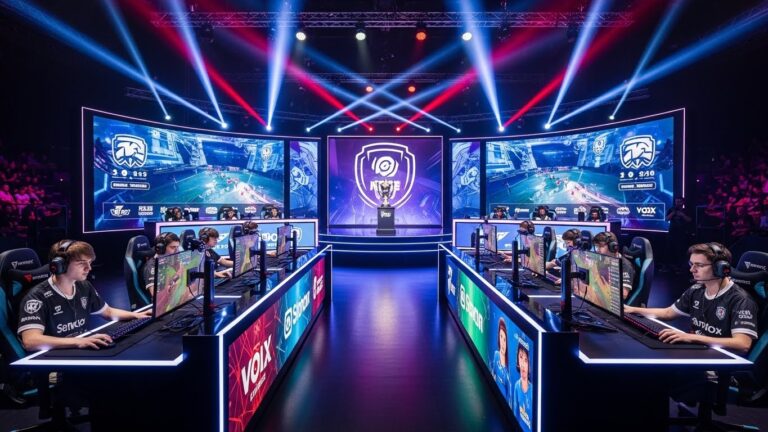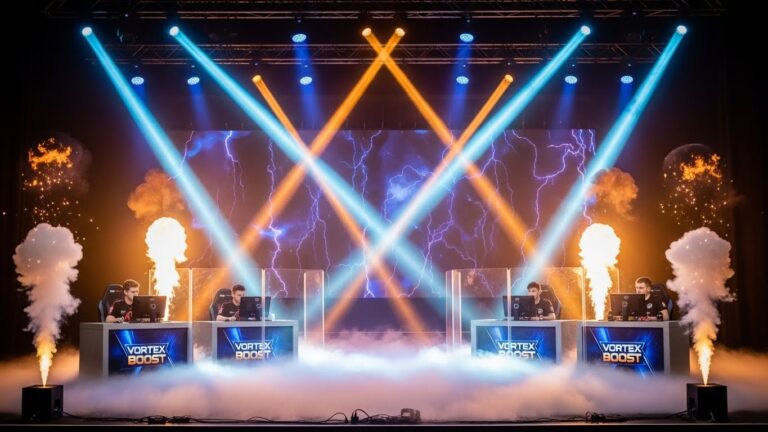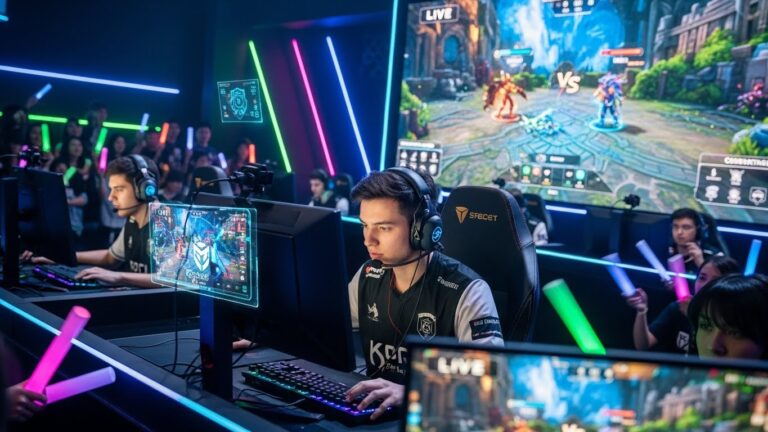
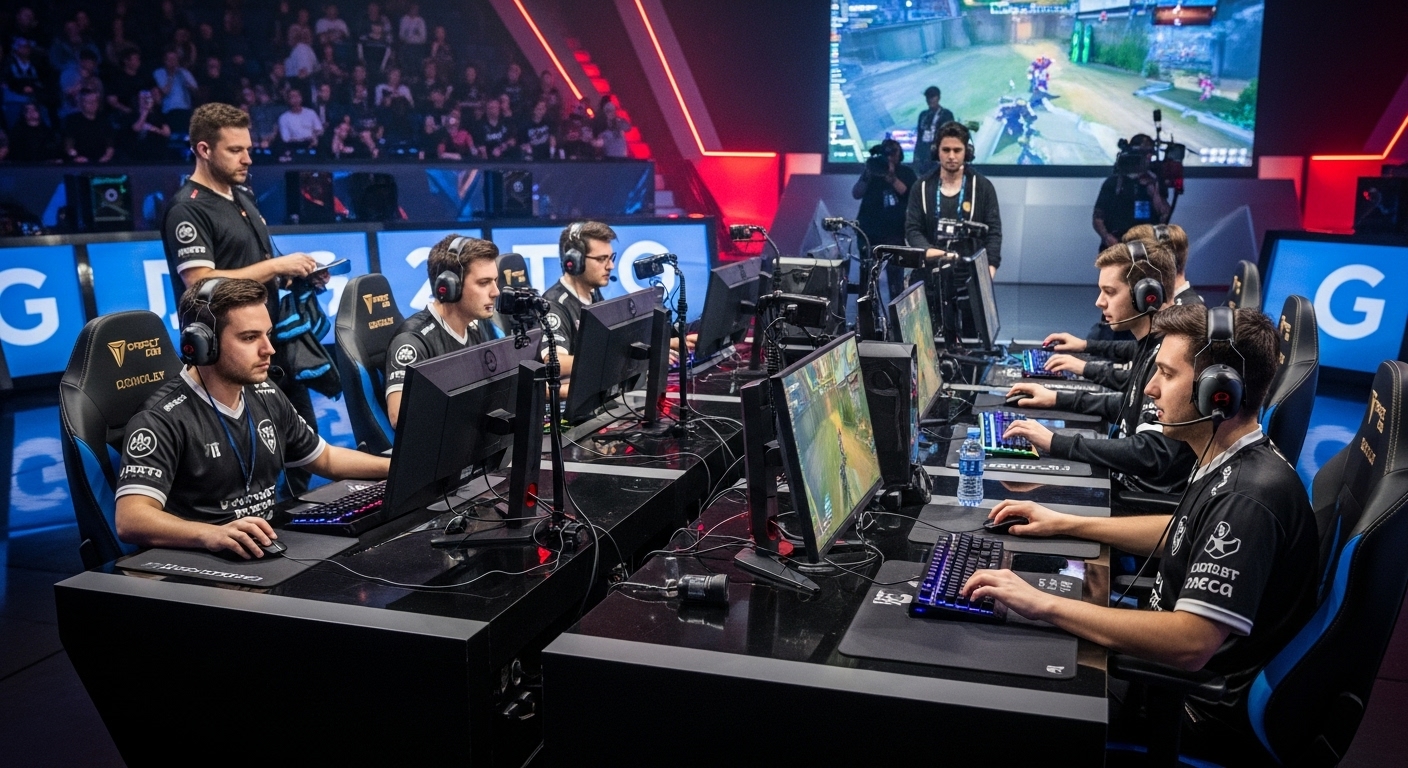
For decades, video games were seen merely as a hobby—a way to unwind after school, a pastime for young people, or an escape from reality. Yet, over the past twenty years, something remarkable has happened. What was once a leisure activity has evolved into one of the fastest-growing industries in the world: esports.
Esports, or electronic sports, refers to organized, competitive video gaming where individuals or teams compete in tournaments, often for massive cash prizes and global recognition. From humble beginnings in small internet cafés to filling entire stadiums and attracting millions of online viewers, esports has transformed into a cultural and economic powerhouse that rivals traditional sports in both scale and spectacle.
The Early Roots of Competitive Gaming
The concept of competitive gaming is far older than most people realize. In the early 1980s, arcade tournaments like the Space Invaders Championship in 1980 drew thousands of participants across the United States. This event, hosted by Atari, is often considered the first major gaming competition in history. Back then, gaming was primarily a social activity centered around arcade machines, and competitions were simple and informal.
Throughout the 1990s, as home consoles and personal computers became more common, gaming started to spread beyond arcades. Titles like Street Fighter II, Super Smash Bros., and Quake began fostering competitive communities. LAN parties—where players would bring their computers together in one place to play—became a defining feature of early gaming culture.
However, these events were still underground compared to mainstream sports. The idea that someone could earn a living playing video games professionally seemed absurd to most people. But as internet technology improved, online play began to connect players from across the globe, laying the foundation for what would become esports as we know it today.
The Internet Revolution and the Birth of Esports
The late 1990s and early 2000s marked the true birth of esports. Broadband internet allowed for seamless online multiplayer experiences, and games like StarCraft, Counter-Strike, and Warcraft III became pioneers of organized competition.
South Korea played a particularly crucial role in this evolution. Following the 1997 Asian financial crisis, the South Korean government invested heavily in digital infrastructure, leading to the rise of internet cafés known as “PC bangs.” These venues became the breeding ground for professional gaming.
Televised StarCraft matches in Korea drew millions of viewers, turning players like Lim “BoxeR” Yo-hwan into national celebrities. By the early 2000s, professional gaming leagues and teams were forming, sponsorship deals were emerging, and the idea of a “pro gamer” began to solidify into a legitimate career path.
At the same time, Western countries saw the rise of tournaments like Major League Gaming (MLG) in the United States, which hosted competitions for Halo, Call of Duty, and other console-based titles. The combination of streaming technology, global connectivity, and rising interest from sponsors marked the beginning of esports as a serious global industry.
The Golden Age of Esports: 2010s and Beyond
The 2010s can be described as the golden age of esports. This was the decade when competitive gaming truly exploded into mainstream culture. Several factors contributed to this transformation: the growth of live streaming platforms, the rise of free-to-play games, and the increasing involvement of large corporations and media outlets.
The Impact of Streaming
Before platforms like Twitch and YouTube Gaming, watching esports was limited to live events or pre-recorded broadcasts. Twitch, launched in 2011, revolutionized the industry by allowing fans to watch their favorite players and tournaments live from anywhere in the world.
Streaming not only democratized content but also turned gaming into a spectator sport. Professional gamers became influencers, building personal brands and connecting directly with their fans. This interaction made esports communities incredibly loyal and engaged, fueling further growth.
Globalization and Franchise Leagues
As esports viewership soared, publishers began to professionalize their tournaments, introducing structured leagues similar to traditional sports. Games like League of Legends, Overwatch, and Dota 2 established annual circuits, complete with franchised teams, coaches, and official governing bodies.
The League of Legends World Championship became one of the biggest annual events in esports, drawing millions of live viewers. In 2019, the championship’s viewership peaked at over 100 million, rivaling the Super Bowl. Meanwhile, The International for Dota 2 offered record-breaking prize pools, surpassing $40 million in 2021.
This level of global participation and prize money transformed esports into a legitimate entertainment industry. Teams were now managed by professional organizations, sponsored by major brands, and operated under multi-million-dollar contracts. The days of casual, grassroots competitions were replaced by high-budget productions with the same grandeur as major sporting events.
Popular Esports Titles and Genres
While nearly any competitive game can be considered part of esports, a few titles dominate the scene. Each has its own unique culture, community, and professional ecosystem.
League of Legends
Developed by Riot Games, League of Legends (LoL) is arguably the face of modern esports. It’s a multiplayer online battle arena (MOBA) game that emphasizes teamwork, strategy, and skill. Since its launch in 2009, LoL has built one of the most extensive professional infrastructures, with regional leagues around the world and a massive annual world championship.
Dota 2
Valve’s Dota 2 is another MOBA powerhouse, famous for The International tournament, which offers some of the largest prize pools in esports history. The game’s complexity and depth attract a passionate and analytical audience, making it one of the most respected titles in competitive gaming.
Counter-Strike: Global Offensive
Few games have had as lasting an impact as Counter-Strike. What began as a Half-Life mod has evolved into one of the most iconic first-person shooters of all time. CS:GO tournaments remain a cornerstone of esports, celebrated for their tactical depth and intense, team-based gameplay.
Fortnite
Epic Games’ Fortnite introduced battle royale gameplay to the esports mainstream. While its style and mechanics are quite different from traditional competitive games, Fortnite’s global popularity and massive youth audience have made it a major part of the esports landscape.
Valorant
Riot Games struck gold again with Valorant, blending elements of CS:GO with hero-based abilities similar to Overwatch. Its well-structured competitive scene and rapid adoption by players worldwide made it one of the fastest-growing esports of the 2020s.
Mobile Esports
In recent years, mobile esports have emerged as a major force, particularly in regions like Southeast Asia, India, and Latin America. Titles such as PUBG Mobile, Mobile Legends: Bang Bang, and Free Fire attract millions of viewers, proving that competitive gaming isn’t limited to consoles or PCs.
The Economic Power of Esports
What truly sets esports apart from its early roots is the sheer scale of its economic influence. The global esports industry has become a billion-dollar market, encompassing sponsorships, media rights, merchandise, advertising, and ticket sales.
Major corporations such as Intel, Red Bull, and Coca-Cola have invested heavily in esports sponsorships. Even traditional sports organizations—like the NBA, NFL, and European football clubs—have launched or partnered with esports teams. This intersection between gaming and mainstream entertainment highlights esports’ broad appeal across demographics.
Franchising has further solidified financial stability for teams. Just as in traditional sports, teams pay substantial fees to join official leagues but gain guaranteed participation and revenue-sharing opportunities. The model has created a sustainable ecosystem where players, teams, sponsors, and organizers all benefit.
Additionally, streaming platforms and broadcasting rights have become significant revenue sources. Esports tournaments are now televised or streamed globally, with commentators, analysts, and production teams ensuring a professional broadcast quality that rivals any sporting event.
The Culture of Esports and Its Community
Beyond the financial and competitive aspects, esports has cultivated a unique global culture. It’s a space where fans, players, and creators come together across languages and borders, united by a shared passion for gaming.
Esports communities thrive on social platforms, forums, and live chats. Fans don’t just watch; they interact, critique plays, celebrate victories, and mourn losses as if supporting their favorite football team. This participatory culture is what makes esports so distinct from traditional media—viewers are part of the experience.
Moreover, esports has given rise to new forms of celebrity. Streamers and pro players enjoy massive followings, often comparable to mainstream entertainers. Personalities like Faker, s1mple, and Ninja have become household names in gaming, representing not just skill but also charisma and influence.
Cosplay, fan art, and fan fiction also play a role in expanding esports culture. Large conventions and tournaments often feature live performances, artist showcases, and merchandise stands, blending the worlds of gaming, art, and fandom into one vibrant ecosystem.
The Role of Education and Career Opportunities
Esports is no longer just a pastime—it’s becoming a legitimate career path. Universities and colleges around the world now offer esports scholarships, degrees in game design and management, and specialized training programs for aspiring players, coaches, and event organizers.
Career opportunities extend far beyond professional gaming. The industry now demands event planners, commentators (known as shoutcasters), analysts, marketing experts, and software developers. The ecosystem mirrors that of traditional sports, where athletes represent only one part of a vast network of professionals working behind the scenes.
In some regions, governments have even recognized esports as an official sport, offering support through infrastructure development and national representation in international competitions.
Challenges and Controversies in Esports
Despite its tremendous success, esports faces a range of challenges. One major issue is the mental and physical health of players. Professional gamers often practice for long hours, leading to burnout, stress, and repetitive strain injuries. The pressure to perform at the highest level can be overwhelming, particularly for younger players who enter the scene early.
Cheating and match-fixing are also persistent problems. As with any competitive environment, the potential for unethical behavior exists, and maintaining integrity is crucial to esports’ legitimacy. Developers and tournament organizers are continually improving anti-cheat technologies and enforcing strict codes of conduct to preserve fairness.
Another ongoing debate revolves around representation and inclusivity. While gaming is accessible to everyone, esports has historically been dominated by male players. Efforts to promote gender diversity and inclusivity have increased in recent years, with female-focused tournaments and mixed-gender teams gaining more visibility.
Finally, game publisher control is a unique challenge in esports. Unlike traditional sports, where governing bodies oversee competition, esports depends heavily on the companies that own the games. This dynamic raises questions about fairness, regulation, and the long-term sustainability of certain leagues or titles.
Esports and Traditional Sports: A New Rivalry or Partnership?
For years, traditional sports and esports were seen as opposites—one physical, the other digital. But as both industries evolve, they’re beginning to intersect in fascinating ways.
Sports organizations now see esports as a way to engage younger audiences. Teams like Paris Saint-Germain, Manchester City, and the Golden State Warriors have invested in esports franchises, blending athletic and digital competition under one brand.
Meanwhile, traditional sports broadcasting has borrowed techniques from esports, incorporating real-time statistics, live commentary, and fan interaction through digital platforms. Some even argue that esports will eventually surpass traditional sports in global viewership, given its accessibility and the younger generation’s digital-first habits.
On the other hand, esports athletes are learning from the discipline and structure of traditional sports. Physical fitness programs, mental health coaching, and teamwork training are becoming standard practices for professional gaming teams.
The Future of Esports: Technology and Beyond
The next decade of esports promises even greater transformation. With the rise of artificial intelligence, virtual reality, and blockchain technology, the landscape of competitive gaming is set to evolve dramatically.
Virtual and augmented reality could revolutionize how players and audiences experience games. Instead of watching on screens, fans might soon immerse themselves directly in digital arenas, cheering on their favorite teams from within virtual environments.
Artificial intelligence will enhance coaching and analytics, helping players refine strategies and track performance more effectively. AI could also be used to detect cheating, optimize matchmaking, and even create more adaptive and competitive game experiences.
Meanwhile, blockchain and digital collectibles are opening new avenues for fan engagement. Esports organizations can create unique digital merchandise, ticketing systems, and reward programs, allowing fans to own a piece of their favorite team’s history.
Perhaps most exciting is the growing role of esports in education and social development. Gaming has become a powerful tool for teamwork, problem-solving, and communication. Schools and youth programs around the world are using esports to teach digital literacy, leadership, and collaboration.
Conclusion: More Than Just Games
Esports has come a long way from its humble beginnings. What started as friendly competition between friends in arcades has become a multi-billion-dollar global industry, shaping entertainment, culture, and technology.
It represents the merging of passion, skill, and innovation—a testament to how human creativity adapts in the digital age. Whether one sees it as a sport, an art form, or a technological marvel, there’s no denying that esports has transformed the way we view competition and community.
In many ways, esports is more than just gaming; it’s a reflection of the modern world—global, connected, and ever-evolving. It shows that the spirit of competition isn’t limited to fields or arenas; it can thrive anywhere people strive to master their craft, push their limits, and inspire others to do the same.
About the Author