Esports, short for electronic sports, has transitioned from a niche hobby to a global phenomenon. From small LAN parties to massive international tournaments with millions in prize money, the esports landscape has changed significantly. Today, it is an industry that spans multiple continents, engages millions of viewers, and provides lucrative careers for players, commentators, analysts, and content creators. In this blog post, we will explore the history, growth, impact, and future of esports, along with its broader cultural significance.
The Origins of Esports
Esports, as we know it today, has its roots in the early days of competitive video gaming. While gaming itself dates back to the 1970s and 1980s, the concept of esports began to take shape in the 1990s. One of the earliest known competitive gaming events was the “Red Annihilation” tournament for the popular first-person shooter (FPS) game Quake. The event, held in 1997, drew a large crowd and had a notable prize: a Ferrari, which was awarded to the winner. This tournament marked the beginning of what would eventually become a massive global esports scene.
The 1990s also saw the rise of arcade gaming competitions, particularly in Japan and South Korea. In these regions, the competitive gaming culture began to gain mainstream attention. As internet connectivity improved in the late 1990s and early 2000s, online multiplayer games became more popular, laying the foundation for future esports events.
The Rise of Online Multiplayer Games and the Birth of Professional Esports
With the advent of high-speed internet and more sophisticated gaming platforms, online multiplayer games became more accessible. In the early 2000s, games like StarCraft, Warcraft III, and Counter-Strike introduced competitive gameplay on a global scale. These games were integral in the rise of professional esports, particularly in South Korea, where the StarCraft scene took off.
In 2000, the first World Cyber Games (WCG) tournament was held. This event became one of the first international esports competitions, attracting players from all over the world. The WCG was instrumental in establishing esports as a serious, competitive pursuit and set the stage for future tournaments.
South Korea deserves special mention in the history of esports. The nation became a hub for professional gaming, particularly through the success of StarCraft. The government recognized the potential of esports as both a form of entertainment and a source of national pride. South Korean cable TV stations began broadcasting esports tournaments, and a professional gaming league was established. By the mid-2000s, South Korea had solidified its position as the global epicenter of esports, and players from the country became internationally renowned.
The Evolution of Esports Tournaments and Prize Pools
As the popularity of esports grew, so did the scale of its tournaments. In the early years, most competitions were relatively small in terms of both prize money and viewership. However, this began to change in the mid-2000s with the rise of larger, more organized events.
One of the defining features of modern esports tournaments is the sheer size of their prize pools. In the past, prize money for esports events was modest compared to traditional sports. However, over the past decade, there has been a dramatic increase in the size of these prize pools. Games like Dota 2, League of Legends, and Fortnite have seen prize pools surpassing millions of dollars.
For example, the Dota 2 International tournament, which first took place in 2011, now regularly boasts a prize pool in excess of $30 million. The prize money for League of Legends tournaments has similarly grown to impressive levels. These astronomical prize pools are the result of both sponsorship deals and crowd funding, where fans contribute to the prize pool through in-game purchases and events.
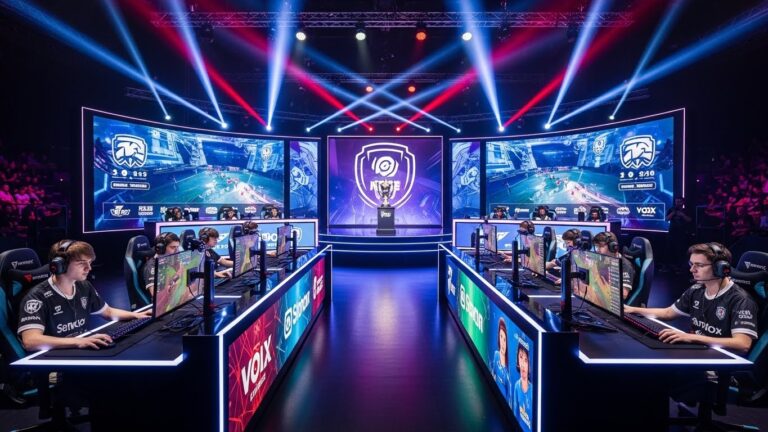
Esports tournaments have also expanded in scale and complexity. What started as small, local LAN (Local Area Network) tournaments has evolved into large-scale global events held in stadiums and arenas with live audiences. The League of Legends World Championship and the Overwatch League are prime examples of this evolution, where millions of fans tune in to watch live broadcasts, while others attend events in person.
The Globalization of Esports
Esports has rapidly become a global phenomenon, reaching millions of viewers from every corner of the world. The rise of platforms like Twitch and YouTube Gaming has played a significant role in bringing esports to a global audience. These streaming platforms allowed fans to watch tournaments and gameplay live, providing a direct connection between players and fans.
In addition to streaming, esports competitions now feature a range of games that appeal to different audiences. Popular esports titles such as League of Legends, Counter-Strike: Global Offensive (CS:GO), Overwatch, Dota 2, and Valorant attract millions of viewers globally, each with their unique fanbases. The rise of mobile gaming has also contributed to the global spread of esports, as games like Clash Royale and PUBG Mobile have millions of competitive players worldwide.
Esports has also led to the development of international leagues, where teams from different regions compete against each other. The League of Legends World Championship, for example, brings together the best teams from North America, Europe, Korea, China, and other regions. These tournaments are broadcasted in multiple languages, further solidifying the global nature of the industry.
The Role of Esports in Shaping Modern Entertainment
Esports has become an essential part of modern entertainment, blending elements of traditional sports with the digital realm. While esports initially attracted gaming enthusiasts, its broad appeal has expanded to include casual viewers, sports fans, and even corporate sponsors.
One of the most significant ways esports has impacted modern entertainment is by blurring the lines between traditional sports and gaming. Many esports events are organized in a similar way to traditional sports tournaments, with regular seasons, playoffs, and championships. Teams have coaches, analysts, and even sponsorships, mirroring the structure of professional sports leagues.
Esports athletes are often compared to professional athletes in terms of their dedication and skill. Just like traditional sports, professional esports players train for hours each day, refining their strategies and improving their in-game mechanics. Many esports stars have gained the same level of recognition and fame as traditional athletes, with massive social media followings and sponsorship deals.
The rise of esports has also led to the development of related industries, including merchandise sales, gaming content creation, and even esports betting. Companies like Razer, Logitech, and Alienware have capitalized on the growth of esports, sponsoring teams and players, while also providing gaming equipment and peripherals.
The Future of Esports: Trends and Opportunities
Looking ahead, esports shows no signs of slowing down. In fact, many experts believe that the industry will continue to grow at an exponential rate, with new developments and innovations on the horizon. Some of the key trends and opportunities for the future of esports include:
1. The Growth of Mobile Esports
Mobile gaming has exploded in popularity over the past few years, and mobile esports is expected to continue growing. Games like PUBG Mobile, Free Fire, and Arena of Valor have established themselves as major players in the esports scene. The accessibility of mobile devices and the increasing sophistication of mobile games have created a massive opportunity for esports organizations to tap into a new audience.
2. Virtual Reality (VR) and Augmented Reality (AR) Integration
As technology continues to evolve, esports could eventually incorporate virtual reality (VR) and augmented reality (AR) into its competitive framework. These technologies have the potential to create more immersive gaming experiences and may lead to entirely new genres of competitive gaming. VR esports, in particular, could change the way players interact with games and how spectators experience live events.
3. Esports and Traditional Sports Integration
Esports and traditional sports are increasingly intersecting. Many traditional sports organizations are investing in esports teams and events, recognizing the potential of this growing market. Some professional sports teams, such as the New England Patriots and Paris Saint-Germain, have established their own esports divisions, further legitimizing esports as a professional career path. Additionally, some traditional sports networks, such as ESPN, have started to broadcast esports events, bringing competitive gaming into the mainstream.
4. Increased Focus on Player Health and Wellbeing
As esports becomes more professionalized, there will be an increasing emphasis on the health and well-being of players. In traditional sports, athletes are often required to undergo physical training and maintain strict fitness regimens. Similarly, esports players may face the same level of scrutiny when it comes to mental and physical health. The rise of sports psychologists, nutritionists, and physical trainers in esports organizations is already a sign of this shift, and the focus on player wellness will continue to grow in the coming years.
Conclusion: The Cultural Impact of Esports
Esports is no longer just a subculture of gaming; it has become an integral part of the global entertainment landscape. It has reshaped how we view video games, transforming them from mere pastimes into highly competitive sports that draw millions of viewers worldwide. The future of esports looks bright, with endless possibilities for growth, innovation, and cultural significance.
Whether you are a player, a fan, or someone interested in the business side of esports, it is clear that competitive gaming will continue to shape the future of entertainment. As technology advances, esports will only become more immersive, exciting, and accessible. One thing is for certain: esports is here to stay, and its impact on popular culture will continue to grow for years to come.
About the Author