Introduction
In the past two decades, a new form of competition has taken the world by storm—Esports. Once considered merely a pastime for video game enthusiasts, Esports has evolved into a global industry with professional players, multi-million-dollar tournaments, sponsorship deals, and millions of viewers watching live broadcasts. What began as small gaming competitions in basements and internet cafés has now transformed into a legitimate entertainment and sporting phenomenon rivaling traditional sports like football, basketball, and cricket. Esports represents not only the power of technology and entertainment but also the changing nature of competition in the digital age.
The Early Days of Competitive Gaming
The roots of Esports can be traced back to the early days of arcade gaming in the late 1970s and 1980s. Back then, players competed for the highest scores in arcade classics like Space Invaders, Pac-Man, and Donkey Kong. The Space Invaders Championship held in 1980 by Atari is often cited as one of the first major gaming competitions, drawing over ten thousand participants across the United States. This marked the beginning of organized gaming contests, setting the stage for what would become Esports.
The rise of home consoles and personal computers in the 1990s accelerated competitive gaming further. Titles such as Street Fighter II, Doom, and StarCraft cultivated communities of players eager to test their skills against others. Local area network (LAN) parties became popular gathering spots for competitive gamers, allowing them to compete in real-time. By the late 1990s, games like Quake and Counter-Strike defined early Esports culture, creating professional teams and small-scale tournaments with prize pools that attracted attention from both players and spectators.
The Birth of Professional Esports
The early 2000s marked the birth of professional Esports. Organizations began forming structured leagues and competitions, and gaming started to be viewed as a career path rather than a hobby. South Korea played a significant role in this transformation. The country’s government and technology infrastructure supported the development of broadband internet, which allowed online gaming to flourish. Games like StarCraft: Brood War became national phenomena, with professional players achieving celebrity status.
Television networks in Korea began broadcasting live Esports matches, and stadiums filled with fans eager to watch their favorite players compete. This professionalization spread globally, inspiring other countries to establish leagues, teams, and tournaments. The emergence of platforms like Twitch and YouTube later made it possible for players from around the world to stream their gameplay and reach international audiences.
The Growth of Esports Titles
The expansion of Esports was fueled by the development of games designed specifically for competitive play. Titles such as League of Legends, Dota 2, Counter-Strike: Global Offensive, and Overwatch became cornerstones of the Esports scene. These games were not only entertaining but also strategically deep, allowing for high-level competition and audience engagement.
League of Legends in particular set a new standard for Esports tournaments. Its annual World Championship attracts millions of viewers worldwide and offers multi-million-dollar prize pools. Similarly, Dota 2’s The International became known for its massive community-funded rewards, which reached tens of millions of dollars.
In the realm of first-person shooters, Counter-Strike: Global Offensive and Call of Duty dominated. Meanwhile, battle royale titles like Fortnite and PUBG added new dynamics to competitive gaming, combining survival, skill, and creativity. Each genre contributed uniquely to the Esports landscape, broadening the audience and introducing new styles of play.
The Rise of Esports Organizations and Teams
As Esports gained momentum, professional organizations began to emerge, mirroring the structure of traditional sports clubs. Teams such as Fnatic, Team Liquid, Cloud9, and T1 became household names within the gaming community. These organizations managed rosters of professional players, coaches, analysts, and support staff. Their operations expanded beyond just gameplay—they became brands, selling merchandise, securing sponsorships, and building fan communities.
Team rivalries added drama and narrative depth to Esports, similar to traditional sports rivalries. Matches between iconic teams like T1 and G2 Esports in League of Legends, or Na’Vi and FaZe Clan in Counter-Strike, drew immense attention. Players like Faker, s1mple, and Bugha became stars in their own right, recognized for their skill, dedication, and competitive spirit.
Esports as a Spectator Sport
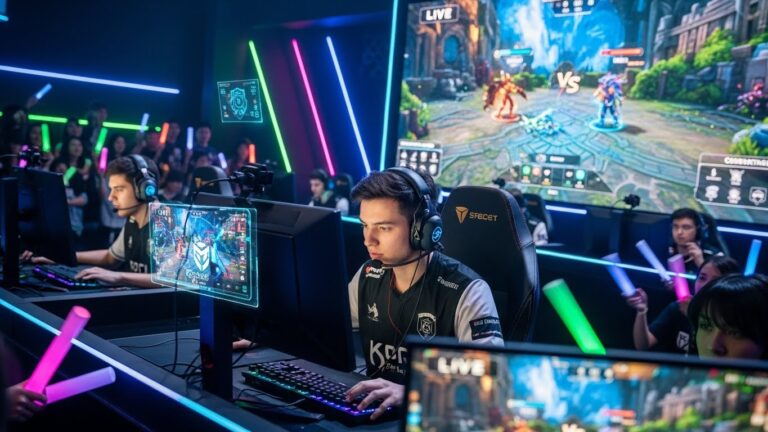
One of the defining features of modern Esports is its spectator culture. Watching others play has become as engaging as playing the games themselves. Streaming platforms transformed gaming into a spectator-driven experience. Millions tune in to watch live tournaments, commentary, and player streams. The appeal lies in the combination of strategy, skill, and unpredictability that mirrors traditional sports entertainment.
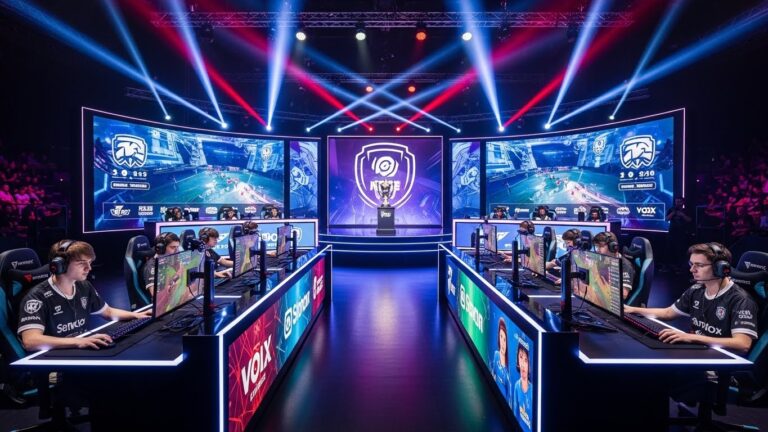
Major Esports events now fill arenas and stadiums. Venues that once hosted concerts and football matches now feature gaming setups, giant LED screens, and roaring crowds cheering for their favorite teams. The energy, production quality, and atmosphere rival that of the biggest sporting events in the world.
The Economics of Esports
The Esports industry has grown into a multi-billion-dollar market, encompassing sponsorships, advertising, ticket sales, merchandise, and media rights. Major brands—from energy drinks and computer hardware manufacturers to fashion labels—invest heavily in Esports to reach younger audiences. Players earn not only through tournament winnings but also through streaming, content creation, and brand endorsements.
Prize pools for major tournaments have reached astronomical levels. The International 2019 for Dota 2 offered over $34 million in prizes. Sponsorship deals and media rights contribute significantly to revenue generation, with global Esports revenues surpassing the billion-dollar mark annually.
The rise of Esports has also created countless job opportunities. Beyond the players themselves, careers in coaching, event management, production, commentary, analytics, and marketing have emerged, building an entire ecosystem around competitive gaming.
Esports in Education and Academics
An interesting development in recent years has been the integration of Esports into education. Universities around the world now offer Esports scholarships, much like those for traditional sports. Students compete for their school teams in collegiate tournaments, blending academic achievement with competitive gaming.
Esports-related academic programs have also emerged, covering topics such as game design, event production, digital marketing, and team management. These initiatives validate Esports as a legitimate career path, recognizing the skills and discipline required to succeed in the industry.
The Psychological and Social Dimensions of Esports
While Esports is primarily about competition and entertainment, it also has profound psychological and social dimensions. Successful Esports athletes exhibit traits similar to traditional sports professionals—focus, resilience, teamwork, and adaptability. The pressure of performing in front of millions of viewers, maintaining consistency, and managing mental health are significant challenges for players.
Moreover, Esports fosters global communities that transcend geographical boundaries. Players and fans from different cultures connect through shared passion, forming online friendships and communities. However, challenges such as toxicity, harassment, and gaming addiction have also emerged, leading to ongoing discussions about healthy gaming practices and player well-being.
Esports and Technology
Technological advancement lies at the core of Esports. High-speed internet, advanced gaming hardware, and streaming technology have made real-time global competition possible. Innovations in artificial intelligence, data analytics, and virtual reality are shaping the future of Esports further.
AI-driven analytics help teams optimize strategies and evaluate player performance. Virtual reality and augmented reality are expected to revolutionize viewer experiences, making Esports events more immersive than ever. Cloud gaming also promises to make competitive gaming more accessible by removing the need for high-end hardware.
Global Esports Culture
Esports is no longer confined to a single region; it is a global phenomenon. Different countries and regions have developed unique Esports cultures. South Korea remains a pioneer, while China’s massive player base has propelled it into one of the largest Esports markets in the world. North America and Europe have established professional leagues and strong fan communities. Meanwhile, countries like Brazil, the Philippines, and Pakistan are rapidly growing Esports hubs, producing talented players and enthusiastic fan bases.
Esports has also become a significant part of pop culture. Crossovers between gaming, music, and entertainment are now common. Virtual concerts, celebrity endorsements, and collaborations between game developers and fashion brands highlight Esports’ cultural influence.
Challenges Facing the Esports Industry
Despite its success, Esports faces several challenges. Issues such as player burnout, lack of regulation, and uneven revenue distribution remain major concerns. Unlike traditional sports, Esports lacks a unified governing body, leading to inconsistencies across tournaments and leagues.
Player contracts, team management, and competitive integrity need greater standardization. Cheating and match-fixing have also threatened the credibility of some competitions. Moreover, the industry’s reliance on game publishers means that control over competitive ecosystems often rests in corporate hands, raising concerns about fairness and sustainability.
Gender inequality is another persistent issue. While there are successful female gamers, the industry remains male-dominated. Efforts are being made to create inclusive spaces and promote diversity, but progress is gradual.
The Future of Esports
The future of Esports looks bright. With technological advancements, increased mainstream recognition, and growing investment, Esports is poised to become one of the most influential entertainment sectors in the world. The inclusion of Esports in major multi-sport events such as the Asian Games marks a milestone toward its recognition as an official sport.
In the coming years, we can expect greater integration between Esports and emerging technologies like blockchain, metaverse environments, and virtual economies. These innovations may redefine how fans engage with their favorite teams and players. Esports is also likely to expand into new genres, platforms, and regions, ensuring continuous evolution and growth.
The Human Element Behind Esports
Behind every Esports match are stories of determination, passion, and resilience. Players train for countless hours, often sacrificing personal time to achieve excellence. The journey from amateur to professional is filled with challenges, from maintaining motivation to handling pressure and public scrutiny.
Coaches, analysts, and team managers work tirelessly to develop strategies and maintain team harmony. Fans, too, play a vital role, offering unwavering support and creating vibrant communities. The connection between players and fans is one of Esports’ most defining elements, blurring the line between entertainment and participation.
Conclusion
Esports has transcended its origins as a niche hobby to become a global cultural and economic powerhouse. It reflects the spirit of modern competition—digital, dynamic, and diverse. As technology continues to evolve, Esports will not only reshape the world of gaming but also influence how people connect, compete, and celebrate excellence.
From humble beginnings in arcades to global arenas packed with cheering fans, the story of Esports is one of innovation, dedication, and human ambition. It represents the merging of passion and technology, proving that in the digital age, competition knows no boundaries.
Esports is not just the future of gaming—it is the future of sports itself.
About the Author