
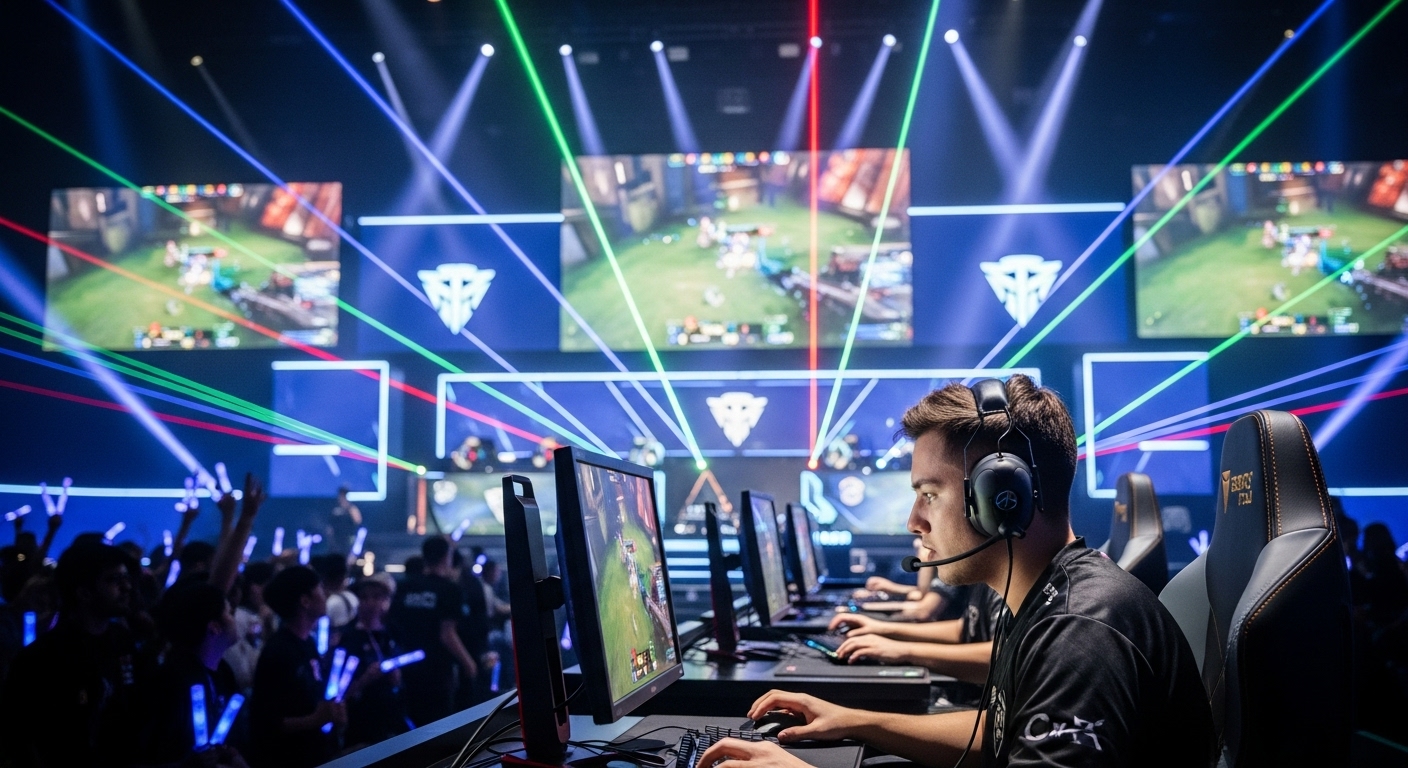
The world of esports has rapidly evolved from casual gaming to a professional and highly competitive industry. Millions of players, coaches, analysts, and fans are involved globally in games that require exceptional skill, strategy, and precision. At the heart of these competitive gaming experiences lies the game engine — the underlying technology that powers the game world, mechanics, physics, and player interactions. Game engines are critical because they directly influence the performance, fairness, and overall quality of esports competitions.
In this blog post, we will explore the crucial role that game engines play in shaping competitive esports performance. We will examine how game engines impact gameplay mechanics, player responsiveness, fairness, spectator experience, and even the development of esports titles themselves. Understanding these aspects will provide deeper insight into why some games succeed as esports and how technology drives competitive balance and player skill expression.
What is a Game Engine?
A game engine is software that provides the core functionalities needed to build and run video games. It includes rendering graphics, simulating physics, processing player inputs, handling networking, managing audio, and controlling artificial intelligence, among other functions. Essentially, it acts as the foundation upon which game developers build their game world and rules.
Popular game engines include Unreal Engine, Unity, Source Engine, and proprietary engines developed by game companies. Each engine has distinct features, optimizations, and limitations that affect how a game performs in different contexts, including competitive esports.
The choice of game engine influences everything from visual fidelity to the speed of gameplay and the accuracy of hit detection, all of which are vital for competitive players who demand precise and consistent experiences.
How Game Engines Affect Gameplay Mechanics
Gameplay mechanics define how players interact with the game world and each other. They include movement systems, combat mechanics, aiming systems, character abilities, and environmental interactions. The game engine dictates how these mechanics are implemented and how smoothly they function.
For example, in first-person shooter (FPS) games, the engine controls aspects such as bullet trajectory, recoil patterns, player movement speed, and hitbox detection. The accuracy and reliability of these mechanics are crucial in esports where fractions of a second and millimeters of aim can determine the outcome of a match.
Some engines are designed to handle fast-paced, high-action gameplay with minimal latency and high frame rates. Others might be better suited for slower, strategic games. This affects player performance since a laggy or inconsistent engine can lead to missed shots, unresponsive controls, or unfair advantages.
In fighting games, the frame data (the number of frames each move takes) is directly linked to how the engine processes animations and inputs. An engine that accurately registers player inputs frame-by-frame enables high-level play and skill expression. Conversely, engines with input lag or inconsistent hit detection can frustrate players and diminish competitive integrity.
Player Responsiveness and Input Latency
One of the most critical factors in competitive gaming is player responsiveness — how quickly and accurately a game registers and reacts to player inputs. This is directly influenced by the game engine’s input handling and processing speed.
In esports, input latency, or the delay between a player’s action (e.g., pressing a button or moving a mouse) and the corresponding in-game response, must be as low as possible. High input latency can create a disconnect between player intention and game outcome, reducing skill expression and leading to unfair scenarios.
Game engines optimized for esports typically prioritize minimizing input latency through efficient processing pipelines, frame prediction, and network optimization. This ensures that player actions are reflected on screen almost instantaneously, allowing top-tier players to perform at their best.
Conversely, engines that struggle with input lag can hinder player performance, especially in fast-paced genres like FPS and fighting games where split-second decisions are essential.
Networking and Server Performance
Multiplayer esports games rely heavily on networked gameplay, where multiple players connect to servers to compete in real time. The game engine handles data transmission between clients and servers, synchronizing player actions and world states.
Effective network code and server architecture embedded in the game engine are crucial for providing a fair and stable competitive environment. Network latency, packet loss, and jitter can cause lag, rubberbanding (players snapping back to previous positions), and desynchronization, which negatively impact player performance and viewer experience.
Esports titles often employ dedicated servers with high bandwidth and optimized game engines that use techniques like client-side prediction and lag compensation to mask network issues. The engine’s ability to smoothly synchronize player actions and maintain fairness despite varying internet conditions plays a huge role in the competitive viability of a game.
Physics Simulation and Fairness
Physics simulation in game engines governs how objects move and interact within the game world, such as projectiles, characters, vehicles, and environmental elements. For esports, realistic and consistent physics simulations are vital for fair competition.
Inaccurate or inconsistent physics can lead to unpredictable outcomes that unfairly benefit or disadvantage certain players or strategies. For instance, if bullet trajectories or collision detections differ between matches or platforms, players cannot reliably strategize or improve their skill.
Engines used in esports typically use deterministic physics models that ensure the same inputs produce identical results every time, especially important for replay systems and anti-cheat measures.
Visual Fidelity and Player Clarity
While visual fidelity might seem more relevant to casual players, it also plays a significant role in competitive esports performance. The game engine’s rendering capabilities affect how clearly players can see important in-game information such as enemy models, projectiles, and environmental cues.
Engines optimized for esports balance high frame rates with clear visuals to reduce distractions and ensure players can spot opponents and react quickly. Excessive visual effects, clutter, or inconsistent frame rates can obscure critical gameplay information and lead to mistakes.
Moreover, some engines allow for customization of graphical settings, enabling players to optimize visuals for competitive advantage, such as reducing shadows or disabling unnecessary effects to improve performance and visibility.
Game Engine’s Role in Esports Spectatorship
Competitive gaming is not just about the players but also about the viewers who watch and analyze matches. The game engine influences the spectator experience through features like dynamic camera control, replay systems, and real-time statistics.
Engines that support smooth replay functions and flexible camera angles allow broadcasters to present matches in an engaging and informative manner. This is crucial for esports growth as spectator engagement drives sponsorships, advertising, and community building.
Additionally, engine-level support for data overlays, player stats, and interactive features can enhance the understanding of game strategy and highlight player skill, further enriching the viewing experience.
Customization and Modding Capabilities
Many successful esports titles owe part of their longevity and popularity to the ability of the community to customize or mod the game. The flexibility of a game engine to support mods, custom maps, and gameplay tweaks can lead to vibrant competitive scenes.
Engines that allow developers and the community to create and test new content help keep the competitive meta fresh and balanced. For example, the Source Engine used in games like Counter-Strike has a long history of community maps and mods that have influenced the competitive landscape.
Furthermore, the ability to rapidly patch and update the game engine to fix bugs, balance gameplay, and introduce new content is essential for maintaining a healthy esports ecosystem.
Case Studies of Popular Esports Engines
To further understand the impact of game engines on esports performance, consider some prominent examples:
- Source Engine: Used in games like Counter-Strike: Global Offensive, this engine is praised for its precise hit registration, consistent physics, and modding support. These factors contribute to its enduring competitive popularity.
- Unreal Engine: Known for its high visual fidelity and flexibility, Unreal Engine powers games like Fortnite and Unreal Tournament. Its ability to handle complex environments and fast-paced gameplay has made it a staple in esports.
- Unity: While less common in top-tier esports, Unity is used in various competitive titles, especially mobile esports, due to its cross-platform support and ease of development.
Each engine’s unique characteristics shape the gameplay experience, balancing technical capabilities with competitive fairness.
Future Trends in Game Engine Development for Esports
As esports continues to grow, game engines will evolve to meet the increasing demands of players and audiences. Emerging trends include:
- Cloud Gaming Integration: Engines optimized for streaming gameplay from the cloud can reduce hardware barriers for players and expand esports accessibility.
- Advanced AI and Machine Learning: Incorporating AI for matchmaking, coaching, and real-time analysis to improve player experience and fairness.
- Enhanced Physics and Realism: Greater fidelity in simulations without sacrificing performance to create immersive yet fair competition environments.
- Cross-Platform Support: Enabling seamless play across different devices while maintaining competitive balance.
- Improved Anti-Cheat Systems: Deep engine integration to detect and prevent cheating, ensuring integrity.
These innovations will further solidify the game engine’s central role in shaping esports’ future.
Conclusion
Game engines are more than just technical backbones of esports titles; they are fundamental to the very nature of competitive gaming. From enabling precise gameplay mechanics and minimizing latency to ensuring fair physics and enhancing spectator engagement, game engines influence nearly every aspect of esports performance.
Choosing the right engine and continuously optimizing it for competitive needs is essential for game developers who want to build successful esports ecosystems. As technology advances, game engines will remain a critical factor in defining the skill ceiling, fairness, and excitement of esports competitions worldwide.
Understanding the deep connection between game engines and esports performance provides valuable insight into why certain games thrive as competitive sports and how the future of gaming technology will shape the global esports landscape.
About the Author