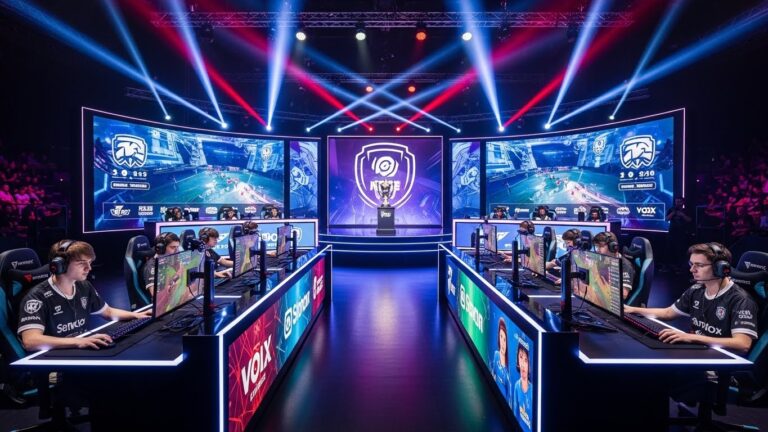
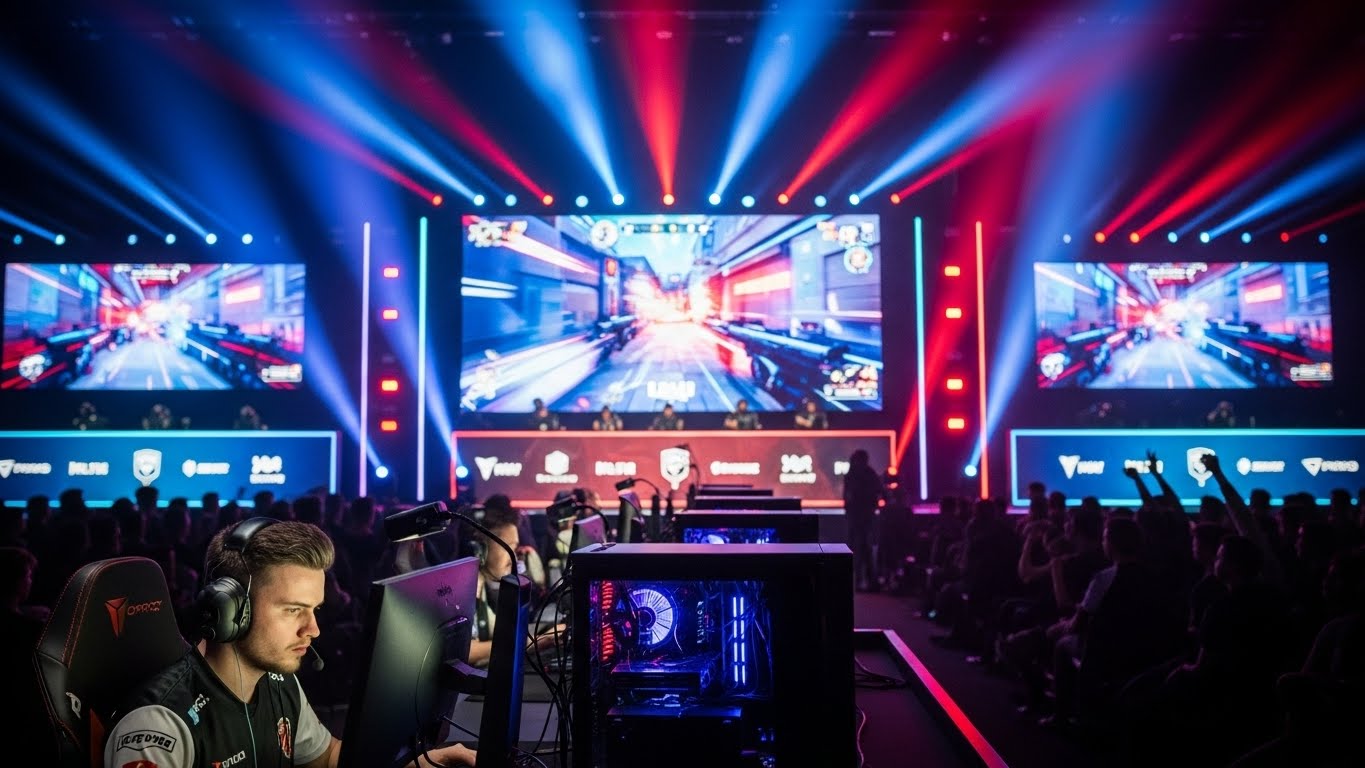
Esports has quickly evolved from a niche subculture into one of the most prominent global industries of the 21st century. What was once a pastime enjoyed by a small group of gamers has transformed into a full-blown competitive sport with professional players, massive audiences, and multi-million-dollar tournaments. Today, esports isn’t just a hobby—it’s a career for many, a lifestyle for others, and a burgeoning form of entertainment that captivates millions of fans worldwide.
In this blog post, we’ll explore the rise of esports, its cultural significance, its impact on the entertainment industry, and what the future holds for competitive gaming.
The Birth of Esports: From Arcade Games to Global Phenomenon
To understand how esports became what it is today, we need to look back at its origins. While competitive gaming may seem like a recent phenomenon, its roots stretch as far back as the 1970s. In 1972, Stanford University hosted the first known gaming competition, the Intergalactic Spacewar Olympics, based around the game Spacewar!. Although this was a one-off event, it marked the beginning of organized gaming competitions.
The true beginning of esports, however, came in the 1990s when multiplayer games like Warcraft and Quake began to gain popularity. Gamers started organizing LAN (Local Area Network) parties, where groups would come together to compete against each other in real-time. These informal events created the foundation for the competitive gaming culture we know today.
As the internet grew more accessible in the late 1990s and early 2000s, esports began to take a more formal shape. Online multiplayer games like StarCraft and Counter-Strike became the cornerstone of competitive gaming. This era saw the emergence of online tournaments, smaller regional competitions, and the first real esports teams.
The Growth and Professionalization of Esports
While the early days of esports were defined by grassroots movements, the turn of the millennium brought about a period of rapid professionalization. Esports organizations, teams, and players began to receive sponsorships from major brands. Players could now compete professionally, travel the world for tournaments, and earn salaries.
In 2000, the first World Cyber Games (WCG) was held in South Korea, which is often considered the first international esports tournament. The event attracted thousands of spectators, and for the first time, esports felt like a legitimate competitive sport. South Korea, already a hotbed for competitive gaming, became the epicenter of esports in the early 2000s. In fact, professional StarCraft players in South Korea were treated as celebrities, and televised esports events began to air on national TV.
By the mid-2000s, companies like Blizzard Entertainment, Riot Games, and Valve Corporation played a huge role in promoting esports through their games. League of Legends, Dota 2, and Counter-Strike: Global Offensive (CS:GO) were released and quickly became some of the most popular competitive games in the world. These games not only attracted players but also massive audiences through live streams and televised broadcasts.
The industry grew rapidly as streaming platforms like Twitch launched in 2011, giving gamers a platform to showcase their skills to an ever-growing audience. Esports tournaments began to be broadcast online, with millions of viewers tuning in to watch the world’s best players battle for supremacy. These platforms helped create a direct connection between players and their fans, leading to the rise of esports as a global entertainment phenomenon.
The Rise of Esports Tournaments and Leagues
The structure of esports tournaments is one of the key factors in its rapid growth. Unlike traditional sports, where teams have established seasons, competitive gaming often revolves around major tournament events throughout the year. These tournaments attract top-tier players, sponsors, and a global audience, with prize pools sometimes reaching tens of millions of dollars.
One of the most famous esports events is The International, the annual tournament for Dota 2. This event is renowned for having one of the largest prize pools in esports, often surpassing $40 million. The incredible scale of The International reflects the increasing commercial potential of esports and its appeal to both sponsors and viewers.
Other major esports tournaments include the League of Legends World Championship, CS:GO Majors, and Overwatch League. These tournaments are held annually and often span months of qualifiers and regional events, culminating in a global showdown that attracts millions of fans. The level of competition in these tournaments is intense, with teams and individual players showcasing incredible skill and strategy.
In addition to global events, esports leagues and professional teams have become a permanent fixture of the landscape. Games like Overwatch, Call of Duty, and Rainbow Six Siege now have their own professional leagues where teams from around the world compete for fame and fortune. These leagues have brought a level of organization to esports that is akin to the structure of major professional sports leagues, such as the NFL or NBA.
Esports Streaming: The Power of the Digital Audience
The role of streaming in the success of esports cannot be overstated. Platforms like Twitch, YouTube Gaming, and Facebook Gaming have provided an accessible way for fans to watch their favorite players and teams in action. These platforms have also created a unique ecosystem where fans can engage with the content in real-time, interact with players via chat, and even donate to their favorite streamers.
Streaming has allowed esports to tap into a broader audience. What was once a niche interest has become a mainstream form of entertainment. According to Twitch statistics, the platform boasts over 15 million daily active users, many of whom tune in to watch esports events. Major tournaments like League of Legends Worlds and The International draw millions of concurrent viewers, making them some of the most-watched events in the world.
The rise of esports streaming has also given players a new avenue for income. Professional gamers not only earn money from tournament prize pools, but they can also monetize their streams through ads, subscriptions, and sponsorships. Many top-tier players now have massive followings on Twitch, YouTube, and other platforms, which contributes significantly to their income and their personal brand.
Esports as a Career and Industry
Esports has opened up a range of career opportunities that didn’t exist a few decades ago. For those with a passion for gaming, there are now numerous ways to enter the industry. Professional players can earn a living from tournament winnings, sponsorships, and streaming. In addition to playing, there are many other career paths within the esports ecosystem, such as coaching, broadcasting, event management, and content creation.
Esports has also sparked the growth of related industries, including game development, marketing, and broadcasting. Games like League of Legends and Fortnite have become major economic drivers in their own right. The global esports economy is expected to surpass $1 billion annually in the coming years, fueled by sponsorships, advertising, media rights, and merchandise sales.
In 2019, The New York Times reported that esports jobs had increased significantly over the previous decade. These roles span across every aspect of the industry, from managing esports teams to providing live commentary on broadcasts. Esports organizations like Cloud9, Team Liquid, and FaZe Clan employ not only players but also analysts, coaches, and support staff.
Colleges and universities have also jumped on the esports bandwagon, offering scholarships for competitive gaming and even creating varsity esports teams. The rise of academic programs dedicated to esports management, broadcasting, and production has solidified esports as a legitimate career path for young people.
The Cultural Impact of Esports
Esports has become a cultural force, influencing the way we think about entertainment and competition. For younger generations, gaming is no longer seen as an isolated activity but as a socially engaging experience. Esports has fostered communities around specific games and players, where fans from around the world come together to share their passion and support their favorites.
The appeal of esports lies in its accessibility. Unlike traditional sports, which require specific physical facilities or skill sets, anyone with a computer or gaming console can compete. Whether it’s a casual player or a professional, the online nature of esports means that anyone from anywhere can be a part of the action.
Moreover, esports has influenced popular culture, with brands, celebrities, and influencers increasingly embracing gaming. Major brands like Coca-Cola, Intel, and Nike have partnered with esports leagues and teams, while figures such as Drake and Post Malone have invested in esports organizations. The growing mainstream acceptance of esports has also led to collaborations with traditional sports, such as NBA teams establishing their own esports teams or streaming platforms broadcasting games like FIFA and NBA 2K.
The Future of Esports: What Lies Ahead?
Looking ahead, the future of esports is undeniably bright. As technology continues to advance, we can expect even more immersive gaming experiences with virtual reality (VR) and augmented reality (AR). These technologies could revolutionize the way esports is played and watched, offering new ways for fans to engage with the action.
Furthermore, the ongoing integration of esports into traditional sports networks and global events like the Olympic Games signals the growing acceptance of esports as a mainstream form of entertainment. Some experts predict that esports may even become a staple in future Olympic Games, further legitimizing its place in the cultural landscape.
As more companies and investors recognize the potential of esports, we can also expect an influx of capital that will continue to drive the growth of tournaments, teams, and infrastructure. The opportunities within esports, both as a career and as an industry, will only expand in the coming years.
About the Author