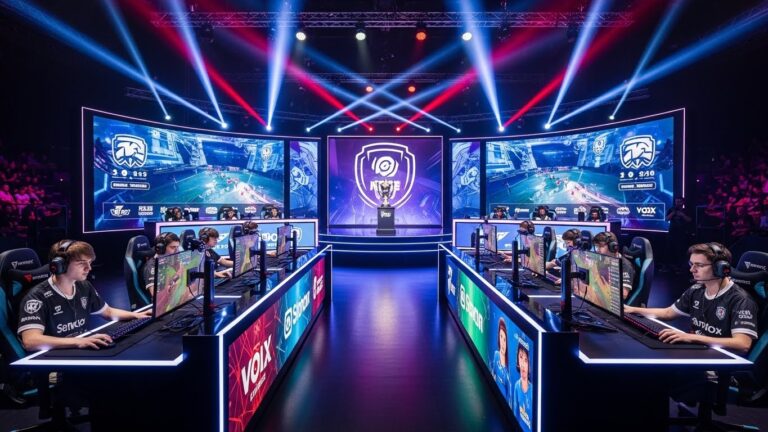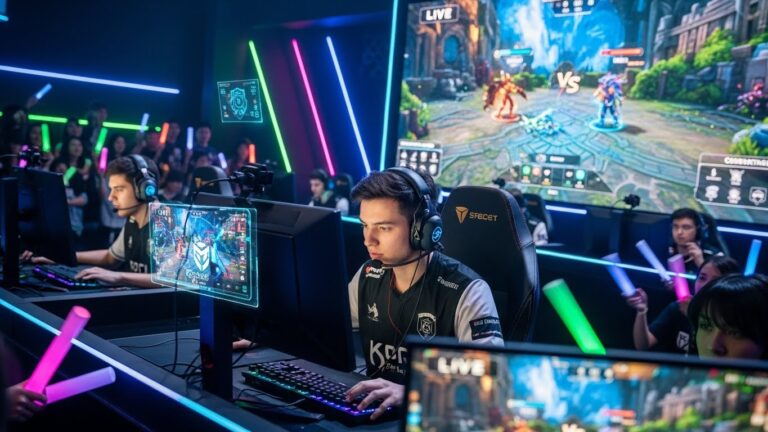
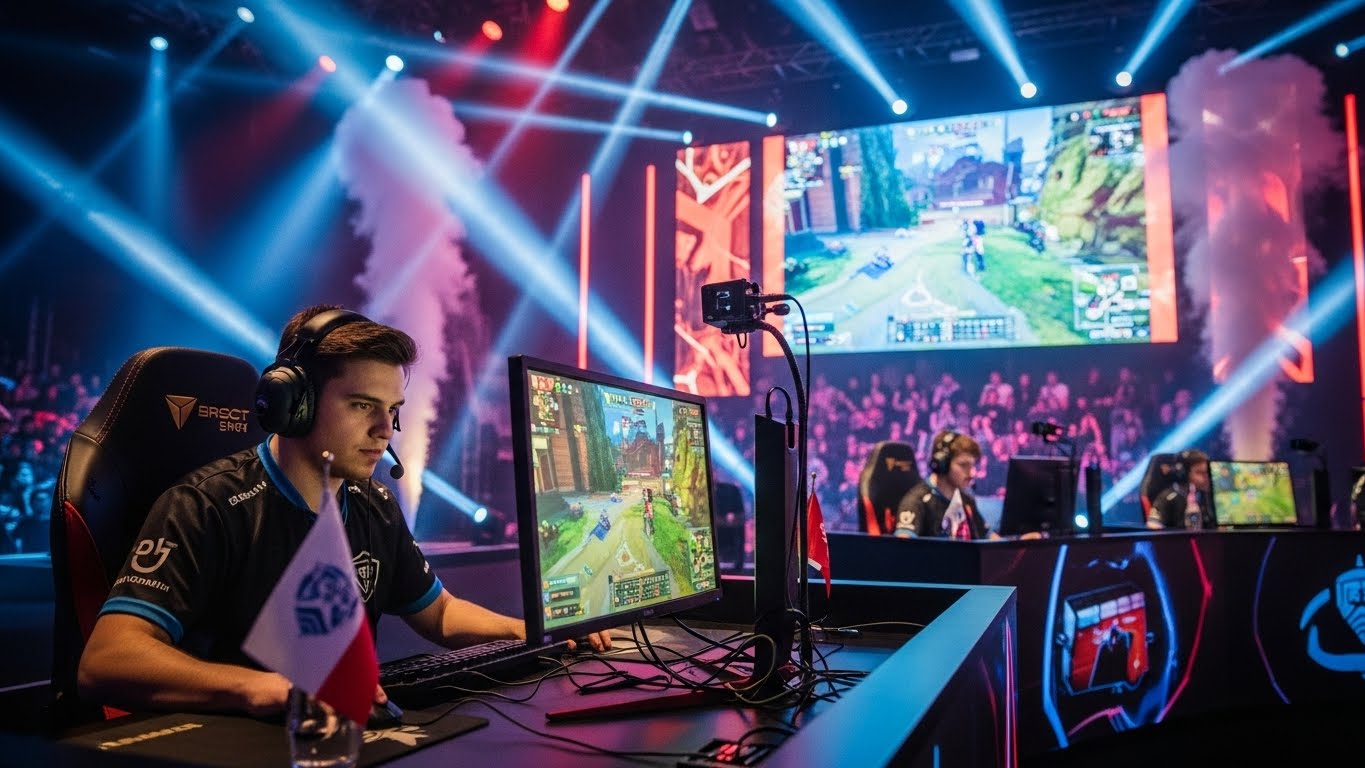
In recent years, esports has transformed from a niche hobby into a global phenomenon, with millions of fans tuning in to watch their favorite players and teams compete for large cash prizes, prestigious titles, and international glory. This explosion in popularity has not only reshaped the gaming landscape but also established esports as a legitimate form of entertainment on par with traditional sports. But what exactly is esports? How has it grown so rapidly, and what are the key factors contributing to its success? In this blog post, we’ll explore the world of esports, its evolution, and its future.
What is Esports?
Esports, short for electronic sports, refers to organized, multiplayer video game competitions, particularly between professional players, individually or as teams. The games played in esports are typically real-time strategy (RTS), first-person shooters (FPS), multiplayer online battle arenas (MOBA), or sports simulation games, where players must possess skill, strategy, and teamwork to succeed.
Esports can take many forms: from local LAN tournaments in a single city to massive international leagues broadcasted on streaming platforms like Twitch, YouTube, and Facebook. What sets esports apart from casual gaming is the competitive structure, where players and teams compete for monetary rewards, sponsorships, and glory, much like traditional sports.
The Evolution of Esports: From LAN Parties to Global Arenas
Esports as a concept dates back to the early 1990s, when games like Doom and Warcraft II provided opportunities for players to compete against one another over local area networks (LANs). In those days, tournaments were small, with participants often meeting in someone’s living room or community center to battle it out in a friendly, yet competitive environment.
However, the real turning point for esports came in the early 2000s. Games like StarCraft, Counter-Strike, and Warcraft III were at the forefront of competitive gaming, with large-scale tournaments drawing substantial audiences. These events were the precursors to the massive esports leagues we see today, and they laid the foundation for the professional esports scene.
In the mid-2000s, esports expanded globally, driven by improvements in internet infrastructure, the rise of broadband connections, and the increasing accessibility of games on the PC platform. Major tournaments like the World Cyber Games (WCG) and Electronic Sports World Cup (ESWC) provided the structure for international competitions, and the first professional esports organizations were born.
Today, esports is an integral part of the gaming culture, with a broad range of titles attracting large-scale sponsorships, media rights deals, and audiences that rival traditional sports in size and engagement.
The Global Appeal of Esports
One of the most remarkable aspects of esports is its ability to transcend geographical and cultural boundaries. Unlike traditional sports, where regional preferences might limit a sport’s global appeal, esports attracts a worldwide audience, thanks to the internet and streaming platforms.
Games like League of Legends, Dota 2, and Fortnite have established enormous fan bases that span across continents. Major tournaments are broadcast live in multiple languages, and fans can interact with players, teams, and fellow viewers in real-time through live chat and social media. Esports’ inclusivity and the ease of access to tournaments online are key to its broad global reach.
Another factor in esports’ international success is the diversity of games. Whether it’s Counter-Strike: Global Offensive (CS:GO) for competitive FPS fans, League of Legends for MOBA enthusiasts, or FIFA for sports gamers, there’s a game for everyone, and each game has its own dedicated esports scene. This diversity ensures that no matter where you are in the world, there’s a game and a team that you can root for.
The Esports Industry: Big Money, Bigger Opportunities
The rapid growth of esports has caught the attention of investors, brands, and media outlets, transforming the industry into a multi-billion-dollar market. Prize pools for esports tournaments have skyrocketed in recent years, with some of the largest events, like The International (the annual Dota 2 tournament), offering prize pools that exceed $30 million.
These astronomical prize pools are just one part of the financial ecosystem that powers esports. Sponsorship deals with major brands such as Coca-Cola, Red Bull, Intel, and Nike have become commonplace, with companies seeking to tap into the massive audience of gamers and esports enthusiasts. In 2020, the global esports industry was valued at over $1 billion, with projections suggesting continued growth in the coming years.
Esports has also opened new avenues for advertising, as companies increasingly recognize the value of reaching the millennial and Gen Z demographic—two generations that spend considerable time gaming. Beyond traditional advertisements, brands are now integrating themselves into esports events through team sponsorships, product placements, and exclusive partnerships.
Moreover, the rise of streaming platforms like Twitch and YouTube Gaming has provided esports players and teams with opportunities to monetize their content, build personal brands, and create fan-driven communities. Streamers, many of whom are professional esports players, can earn money through subscriptions, donations, and advertisements, further contributing to the economic growth of esports.
The Players: From Hobbyists to Professionals
One of the defining features of esports is the level of skill and dedication required to reach the top. Competitive gaming has evolved into a career for many players, with professional teams, coaches, analysts, and managers all playing integral roles in the success of a team or individual player.
To succeed in esports, players must train for countless hours, practicing mechanics, strategy, and communication. Just like traditional athletes, esports players must maintain peak physical and mental health to perform at their best. In fact, the importance of mental health in esports is becoming a more prominent topic, with players experiencing intense pressure, burnout, and even physical health issues due to the long hours of gameplay.
Professional players have a life expectancy in their esports careers similar to that of traditional athletes—typically peaking in their early to mid-20s. After that, many transition into roles such as coaches, analysts, or content creators. The esports industry has created a sustainable ecosystem where players can transition to new careers within the scene once their competitive days are over.
Teams have also become critical to the success of the players. Organizations such as Team Liquid, Cloud9, Fnatic, and T1 have invested heavily in developing their players, offering them not only financial support but also coaching, team-building exercises, and access to the best training facilities. These organizations are the backbone of the esports ecosystem, providing structure and stability to the ever-growing competitive scene.
Esports as a Social Phenomenon
Esports is not just about the games themselves—it’s about the culture and community that have developed around competitive gaming. The gaming world has long been a space for individuals to form communities based on shared interests and passion for specific games or genres. Esports takes this a step further, where fans not only cheer for their favorite players and teams but also participate in the action through live streams, social media, and fan events.
Tournaments and events like BlizzCon, League of Legends World Championship, and DreamHack attract thousands of fans to arenas, and millions more watch from home. These events are filled with fanfare, from team chants and cosplays to meet-and-greets with players. Fans connect with one another over shared experiences, discussing strategies, sharing memes, and supporting their favorite stars in the esports ecosystem.
The rise of esports influencers and content creators has also contributed to its cultural relevance. Platforms like Twitch have turned esports players into celebrities, with millions of fans following their streams, watching their videos, and engaging with their content. These influencers have become tastemakers in the gaming world, and their endorsements or participation in events can drive significant interest in certain games or teams.
The Future of Esports: What’s Next?
Esports has already come a long way from its humble beginnings, but the future looks even brighter. With technological advancements such as virtual reality (VR), augmented reality (AR), and artificial intelligence (AI), esports could evolve into even more immersive and interactive experiences. The integration of VR and AR could provide fans with the opportunity to experience tournaments from unique perspectives or even step into the virtual arena themselves.
Additionally, the continued growth of mobile gaming opens new possibilities for esports in the mobile sector. Games like PUBG Mobile and Mobile Legends have already seen considerable success in regions like Southeast Asia, and this trend is likely to continue as mobile devices become more powerful and accessible.
Esports is also expected to become more integrated into mainstream media. Television networks, streaming services, and even traditional sports leagues are beginning to see the value in esports, leading to cross-promotion and hybrid events. We could soon see esports and traditional sports merge in new, innovative ways, broadening the appeal of both.
Conclusion
Esports is more than just a trend—it’s a global, cultural, and economic force that is reshaping the entertainment landscape. What started as a passion for competitive gaming has blossomed into a billion-dollar industry that attracts millions of fans, players, and brands. As the esports industry continues to grow, it will undoubtedly face new challenges and opportunities, but one thing is certain: competitive gaming is here to stay.
Whether you’re a die-hard fan or someone new to the world of esports, there’s never been a better time to dive into the exciting, fast-paced world of competitive gaming. From the thrilling action of live tournaments to the vibrant online communities, esports offers something for everyone. And with new advancements in technology and media, the future of esports is brighter than ever.
About the Author