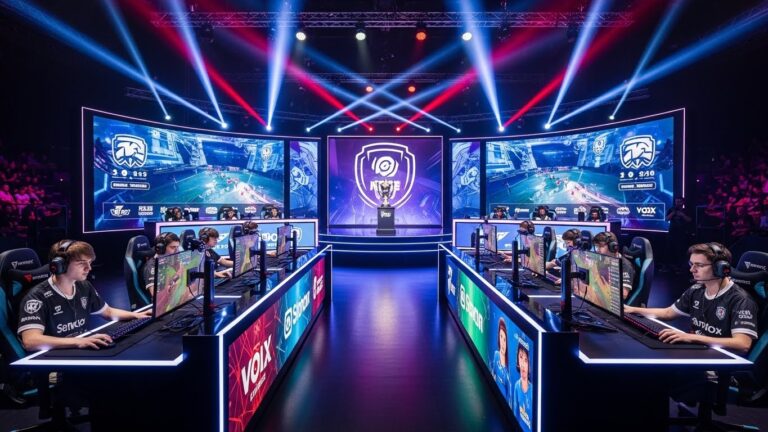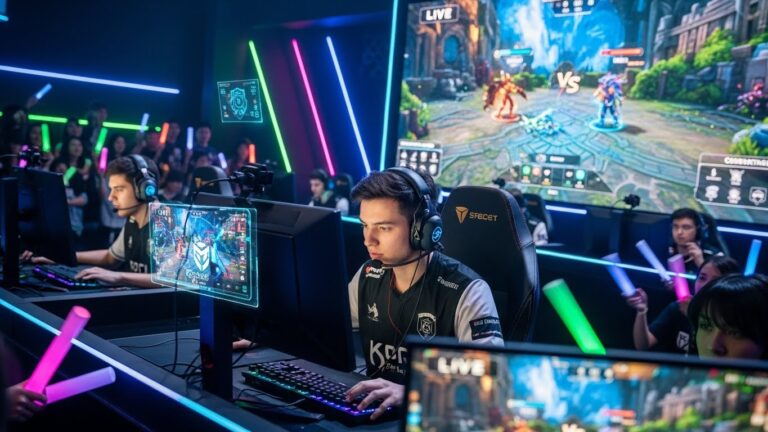
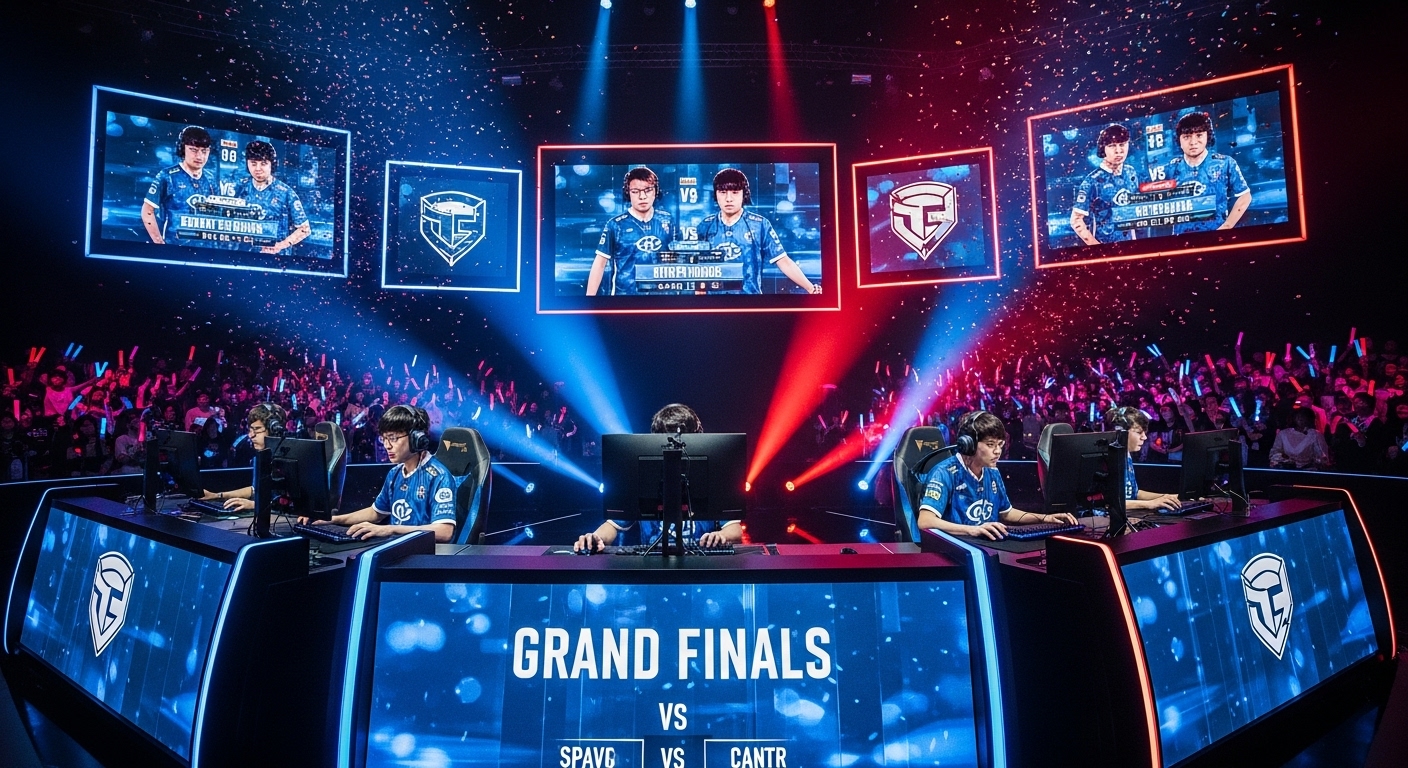
Esports, or electronic sports, is no longer just a niche interest. Once relegated to the fringes of the gaming world, esports has exploded into a global phenomenon that now attracts millions of viewers, participants, and even investors. With tournaments offering multi-million-dollar prize pools, world-class athletes competing for national and international glory, and an industry that generates billions in revenue, esports is now a mainstream form of entertainment. In this blog post, we will explore the rise of esports, its impact on the gaming and sports industries, the cultural significance of competitive gaming, and the future potential of this rapidly growing field.
What is Esports?
At its core, esports refers to organized, multiplayer video game competitions, particularly between professional players, teams, and organizations. These competitions can range from online matches between individual gamers to large-scale, live tournaments held in massive arenas. Esports spans across a wide array of game genres, including first-person shooters (FPS), multiplayer online battle arenas (MOBA), real-time strategy (RTS), and sports simulation games.
Unlike casual gaming, which is typically done for fun or personal achievement, esports is highly competitive, often involving teams of players who train for months or even years to master their chosen games. Esports competitions are structured, with tournaments taking place in various formats: some are single-elimination, while others are round-robin leagues or group stages. The level of skill, strategy, and teamwork involved in esports has elevated it to a professional level, akin to traditional sports like football, basketball, or soccer.
The Early Beginnings of Esports
Esports has a surprisingly long history, dating back to the 1970s and 1980s, when video games were first emerging as a form of entertainment. The earliest recorded esports competition took place in 1972 at Stanford University, where students competed in a game called Spacewar. However, it wasn’t until the 1990s that esports started to gain momentum.
One of the key milestones in the development of esports was the release of StarCraft in 1998. The real-time strategy game quickly became popular in South Korea, where it sparked the growth of competitive gaming. StarCraft tournaments began to be televised, and professional leagues were formed, creating a foundation for the esports ecosystem. South Korea became the global hub for esports, and the success of StarCraft proved that competitive gaming could attract large audiences, sponsors, and media attention.
As the internet became more widely accessible, online gaming platforms like Battle.net and later, platforms like Steam and Twitch, allowed gamers from around the world to compete against each other. The rise of games like Counter-Strike, League of Legends, and Dota 2 helped solidify the global appeal of esports, and by the 2000s, competitive gaming was a mainstream activity in many parts of the world.
The Explosion of Esports in the 2010s
The 2010s marked the true explosion of esports. As gaming technology advanced, so too did the scale of esports tournaments. This was fueled by several factors, including the increasing accessibility of high-speed internet, the growth of live streaming platforms, and the rising popularity of games that were designed specifically for competitive play.
A key turning point for esports was the creation of the streaming platform Twitch in 2011. Twitch allowed gamers to stream their gameplay live for an audience, which introduced a whole new dimension to esports. Viewers could watch professional players and teams compete in real-time, follow their favorite gamers, and even interact with them via live chat. Twitch quickly became the primary platform for esports streaming, and it played a crucial role in helping the industry grow. By 2014, Twitch was acquired by Amazon for nearly $1 billion, which further validated the financial potential of esports.
Simultaneously, game developers began to recognize the commercial potential of esports. Riot Games, for example, launched the League of Legends World Championship in 2011, which grew to become one of the biggest esports events in the world. In 2014, the Dota 2 International tournament shattered records for prize pools, offering more than $10 million, a figure that would become the standard for top-tier esports events. The combination of live streaming, lucrative sponsorships, and massive prize pools began to attract serious attention from both players and investors, propelling esports into the global spotlight.
Esports as a Global Industry
Today, esports is a multi-billion-dollar industry that encompasses a wide range of stakeholders: professional players, teams, game developers, tournament organizers, sponsors, broadcasters, and fans. The sheer scale of the industry is staggering. According to a report by Newzoo, a leading gaming and esports analytics company, the global esports market was projected to generate over $1.6 billion in 2023, with a viewership that spans over 500 million people worldwide.
The esports ecosystem operates much like traditional sports, with professional teams signing players to long-term contracts, sponsorships from major brands, and media rights deals that allow tournaments to be broadcast on television and streaming platforms. Brands like Coca-Cola, Intel, Nike, and Mercedes-Benz have all invested heavily in esports sponsorships, further legitimizing the industry as a commercial powerhouse.
Esports also boasts a diverse audience. While competitive gaming has its roots in young male gamers, the industry now attracts a wide demographic. Women make up a significant portion of esports fans, and esports tournaments are increasingly being designed to be inclusive and welcoming to all types of players and fans.
The Culture and Community of Esports
Beyond the competitions and money, esports has created a rich and vibrant community that is defined by passion, collaboration, and camaraderie. Esports fans are among the most dedicated in the world. They not only support their favorite teams but also actively engage in the gaming culture through fan communities, forums, and social media.
The sense of community in esports is further amplified by the growing number of fan conventions, tournaments, and live events. The League of Legends World Championship, The International (Dota 2), and Overwatch League Finals are just a few examples of events that draw tens of thousands of fans to arenas and stadiums, while millions more watch from home. These events often feature fan meet-ups, cosplay, merchandise sales, and a variety of entertainment, turning them into full-scale celebrations of the gaming culture.
Esports has also become a career path for many players, coaches, analysts, casters, and content creators. Professional esports players train intensely to perfect their skills, while coaches and analysts work behind the scenes to craft strategies that can give their teams the edge. Commentators and casters bring the excitement of the action to life, providing commentary and analysis for live broadcasts. Influencers and content creators use platforms like YouTube and Twitch to build their brands and engage with their followers, further growing the esports ecosystem.
The Future of Esports
As esports continues to grow, the future looks bright. One of the most exciting developments is the increasing integration of esports into mainstream sports. Traditional sports leagues like the NBA, NFL, and European football clubs have invested heavily in esports, either by establishing their own teams or sponsoring existing organizations. This crossover has legitimized esports in the eyes of many and has introduced the competitive gaming scene to a broader audience.
Another significant trend is the rise of esports as an educational tool. Colleges and universities are beginning to offer scholarships for esports athletes, and several schools have established competitive gaming programs and esports arenas. This has further legitimized esports as a professional pursuit and opened up new opportunities for young gamers to turn their passion into a career.
Technological advancements also promise to enhance the esports experience. Virtual reality (VR) and augmented reality (AR) could change how games are played and spectated, providing immersive experiences that bring viewers closer to the action than ever before. With 5G networks on the horizon, esports will be able to reach even more people globally, with faster streaming and lower latency for a more seamless viewing experience.
Conclusion: The Legacy of Esports
Esports is no longer a fringe activity. It has grown into a global cultural and economic force, drawing in millions of players, fans, and viewers from around the world. What started as a hobby for a few passionate gamers has transformed into a billion-dollar industry with the power to rival traditional sports in terms of viewership, revenue, and cultural influence.
As the industry continues to evolve, it will be exciting to see how esports will further integrate into mainstream culture, how new technologies will shape the experience, and how future generations of gamers will redefine the world of competitive gaming. One thing is certain: esports is here to stay, and its impact on entertainment and culture will only continue to grow.
About the Author